
Large Truck Accidents
What Families Need to Know When Life Changes in an Instant
When a collision with a large truck or semi truck happens, the ground feels unsteady. The size and force involved leave people shaken, injured, and unsure about what comes next. Families often sit with fear about medical care, income, and how a normal life resumes after a moment like this. Questions surface quickly, many of them hard to say out loud. This page exists to answer those questions with clarity and calm.
Why large truck collisions feel different right away
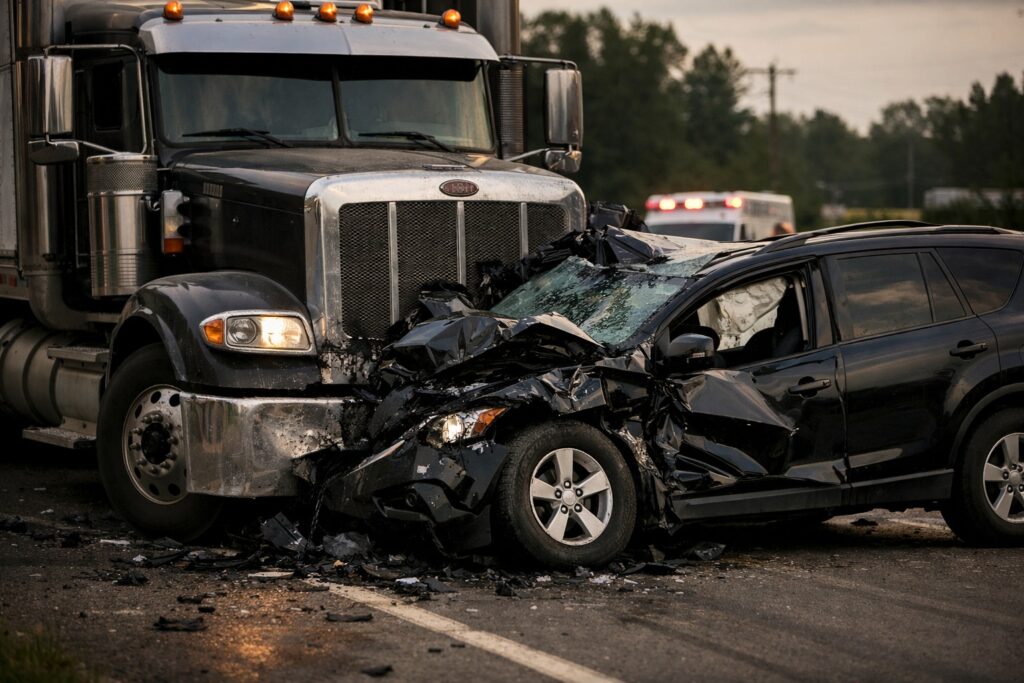
A crash involving a commercial truck brings a level of damage and disruption far beyond most car accidents. These vehicles weigh tens of thousands of pounds and operate under strict rules. When something goes wrong, injuries tend to be severe and recovery often takes time. Families feel the weight of the trucking company and the insurance carrier almost immediately. That imbalance creates stress and confusion during an already painful period.
Who holds responsibility beyond the truck driver
Responsibility in a trucking collision rarely rests with one person. Drivers work under schedules, policies, and supervision set by companies. Maintenance crews inspect brakes and tires. Loading teams secure cargo. Safety managers track hours and routes. Each layer plays a role in what happens on the road. A full investigation looks at every decision and every system connected to the crash.
Why trucking cases require careful handling
Commercial trucking cases involve federal and state rules, corporate records, and layers of insurance. Evidence often exists in digital form through onboard systems, driver logs, dispatch records, and maintenance files. These materials tell the story of speed, braking, rest periods, and compliance. Without early attention, records fade or disappear. Timing matters because facts shape outcomes.
What trucking companies and insurers do after a crash
Within hours of a serious collision, trucking companies move quickly. Insurance teams review coverage. Investigators arrive at the scene. Internal reports begin. The focus stays on protecting the company. Injured people and families often feel left behind during this process. Awareness of this early activity helps explain why guidance at the beginning brings peace of mind.
How evidence gets preserved
Evidence includes crash scene photos, vehicle data, witness accounts, and physical damage. Medical records connect injuries to the collision. Communication records show decisions made before and after the crash. Early steps protect this information and prevent gaps. A steady approach keeps the story intact from start to finish.
What injured people should do in the early days
Medical care comes first. Follow treatment plans and attend appointments. Keep copies of paperwork and bills. Write down symptoms and changes in daily life. Avoid recorded statements with insurance representatives until proper guidance exists. Silence during this phase protects accuracy and reduces stress.
What injured people should avoid
Avoid guessing about fault. Avoid minimizing pain to appear strong. Avoid posting details online. Words travel far once shared and context often disappears. Careful choices early on support a smoother path forward.
How fault gets examined
Fault develops through evidence, not assumptions. Investigators study road conditions, vehicle performance, driver conduct, and company practices. Witness testimony and expert review add clarity. This process unfolds step by step and remains grounded in facts.
How medical care and finances intersect
Serious injuries bring hospital stays, rehabilitation, and follow up treatment. Bills arrive quickly. Time away from work affects income and family stability. A clear plan aligns medical needs with financial recovery so families focus on healing rather than paperwork.
What recovery looks like over time
Recovery after a truck collision moves at its own pace. Physical healing often pairs with emotional strain. Families adjust routines, roles, and expectations. Legal guidance offers structure during this period and helps keep decisions grounded.
How wrongful death cases differ in trucking collisions
When a life ends in a trucking collision, the loss touches every part of a family. The law recognizes financial support, care, and guidance the loved one provided. The process respects grief and moves with care. Accountability honors the life lost and supports those left behind.
Why experience matters in these cases
Large trucking companies operate with resources and teams ready to respond. Experience brings familiarity with industry practices and regulatory standards. Preparation builds confidence and steadiness throughout the process.
How families regain a sense of control
Understanding what happens next reduces fear. Clear communication restores balance. Each step taken with purpose helps families breathe again and plan for the future.
Moving forward with clarity
A large truck collision changes life in an instant. Answers and support help restore direction. A thoughtful approach protects rights, preserves evidence, and supports healing. For families seeking clarity and calm during a difficult time, learning the process brings reassurance and strength.
You don’t have to face this alone. Contact us today for a free, confidential consultation.
More: Auto and Motorcycle | Large Truck | Burns and Paralysis | Dog Bites | Premises Liability | Testimonials | Case Results